The Maguire Farm

Custom Search

Home

Barns

Basement

Bob

Bugs

Cats

Chickens

Cows

Dogs

Ducks

Ferrets

Finch

Fireplace

Fish

Found on the Farm

Goats

Guinea Fowl

Guinea Pig

Herd

Hogs

Horses

House

John Deere

Live Cameras

Lizard

Llamas

Natural Nutrition

Oak Tree

Parakeet

Peafowl

Pigs

Pond

Ponies

Photos

Rabbits

Salamanders

Sheep

Snake

Springhouse

Turkeys

Upper Barn

Videos

Updates

Privacy Policy

Horses with Amie
Horses with Amie

Love Puppies?
Love Puppies?

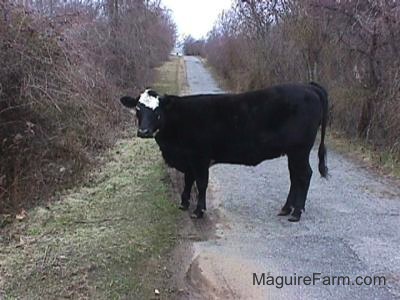
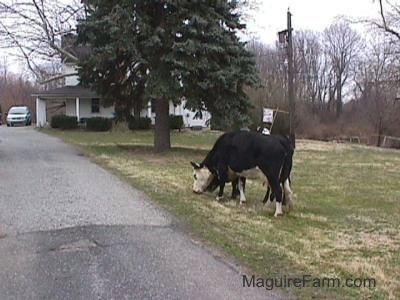
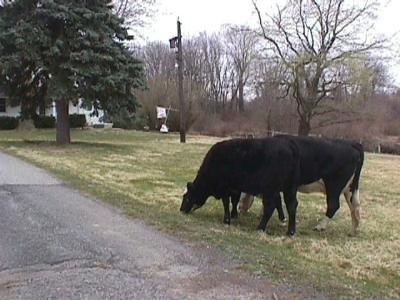
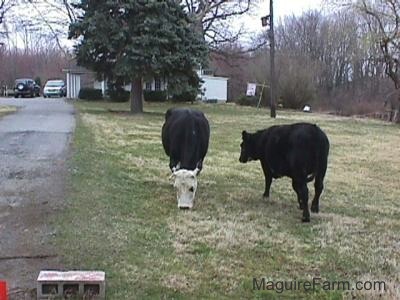
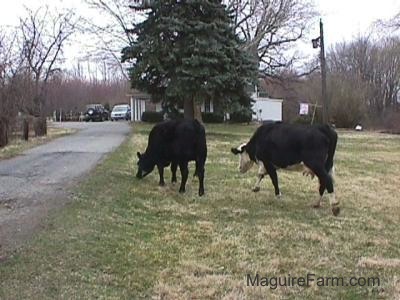
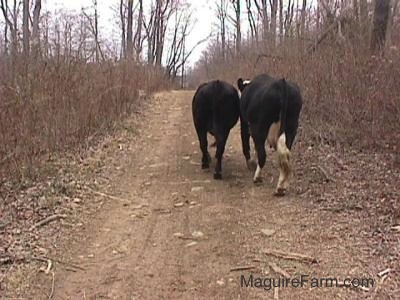
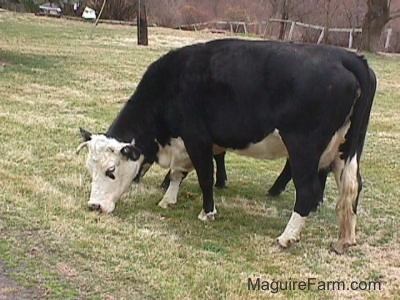
Cows

Scientific Name Disambiguation
Genus Bos
Kingdom Animalia
Phylum Chordata
Class Mammalia
Subcalss Theria
Order Artiodactyla
Subfamily Bovinae
Family Bovidae
Origin It is thought that they originated from the middle east but are now found all over the world.
Type Warm-blooded large domesticated animals and the most common domesticated ungulate. Males have horns and females have utters. They are raised as livestock for meat (beef and veal), as dairy animals for milk and other dairy products, and as draft animals. They are also used for leather and their waste as fertilizer.
Natural Environment Cows prodominatly live in grasslands but they are not found wild in the United States or much of the world anymore. They live in herds that are maintained by humans.
Diet Cows were meant to eat grasses and other vegetation. A field of grass and access to water is all a cow needs to survive. It is not recommended to feed them corn, grain, soy or other supplemented foods to replace grass because they will not absorb the nutrients needed and will likely have to be put on antibiotics to treat acidosis. Corn causes high acid levels in the stomach which can later cause diarrhea, ulcers, bloat, liver disease and weakening of the immune system which exposes them to a number of other illnesses.
Digestion

Cows (cattle) have one stomach with four different chambers, rumen, reticulum, omasum and abomasum. The largest chamber is the rumen and the reticulum is the smallest. The omasum is often referred to as the "true stomach" because its job is to absorb water and all the nutrients from feed. The digestive system of cattle allow them to take indigestible foods and regurgitate them as cud, food that come from the reticulum to be chewed a second time. When re swallowed the cud enters the rumen chamber and is further digested by microorganisms. When a microorganism dies off, the carcass will continue through the digestive tract providing the cattle with a high quality protein source.

Grass-fed and Feedlot Cattle

The term "grass-fed" refers to cattle that are only eating grasses and other vegetation. This label is often seen when purchasing meat to eat. Meat not labeled grass-fed came from a cow that was likely on a corn or grain based diet, "feedlot cattle". There is less nutrients in the meat because the cattle did not properly absorb nutrients when it was still alive. The reason corn is fed to cattle is to speed up the rate they can be slaughtered and sold. They are fed high amounts of corn, protein supplements, antibiotics and other drugs that include growth hormones. This is all to get cattle at age 14-16 months old to the slaughter house verses 4-5 year old cattle who were grass fed since it takes longer for them to reach a certain weight.

Most farmers in the United States feed the cows corn because corn is subsidized by the federal government making it a cheap way to feed the cows. The cows gain weight quickly on the corn. Because the cows were not meant to eat corn they must be fed antibiotics to keep them from getting sick and dying. Therefore grain fed cows not only have higher levels of the bad fatty acids, but some of the antibiotics the cows eat are passed onto the person eating the cow.

Omega-3 & Omega-6

Omega-3 fatty acids are the good kind of fatty acids that our bodies need for regular body funtions. They cannot be synthesized by the human body but are vital for normal metabolism. Omega-6 fatty acids are a family of unsaturated fatty acids are not as good as omega-3 but are still needed in the body. Both types of fatty acids should be consumed but the level of omega-3 fatty acids should be much higher than omega-6. Grass fed cows have a good balance of omega-3 and omega-6 fatty acids. The meat is leaner and much healthier, however, most cows now-a-days are not fully grass-fed which causes the level of omega-6 fatty acids to rise. Cows that are unnaturally fed grain rather than grass, produce meat that is higher in the bad omega 6 fatty acid.

E. Coli (Escherichia Coli)

When a cow eats grains the environment in the cows stomach is the perfect condition for Escherichia Coli, otherwise known as E. Coli. E. Coli is a big problem in the beef industry. When a cow eats grass, the food nature intended it to eat, the conditions in the cows stomach are the wrong environment for E. Coli. Grass fed cows do not have an E. Coli problem. If a corn fed cow is fed grass the last few weeks of it's life 80% of the E. Coli living in its stomach naturally dies.

Quick Facts

Heifer: Pronunciation: 'he-fer
a young cow; especially one that has not had a calf

Cow: Pronunciation: 'kau
1. the mature female of cattle (genus Bos)
2.  a domestic bovine animal regardless of sex or age

Bull: Pronunciation: 'bul
a male bovine; especially - an adult un-castrated male

Calf: Pronunciation: 'kaf,
1. the young of the domestic cow

Cattle: Pronunciation: 'ka-tel
1. domesticated quadrupeds held as property or raised for use; specifically - bovine animals on a farm or ranch

Copyright Dog Breed Info Center® www.dogbreedinfo.com - Used with Permission

This herd of cows is located in Maui, Hawaii at the Piiholo Ranch. They are all grass-fed and used at local resturants for beef.


Cow Info

Cows Page 2

Cows Page 3


The Material contained herein may not be reproduced without the prior written approval of the author. Contents & Graphics Copyright © Maguire Farm (C) 2001-. All Rights Reserved. Our work is not Public Domain.